

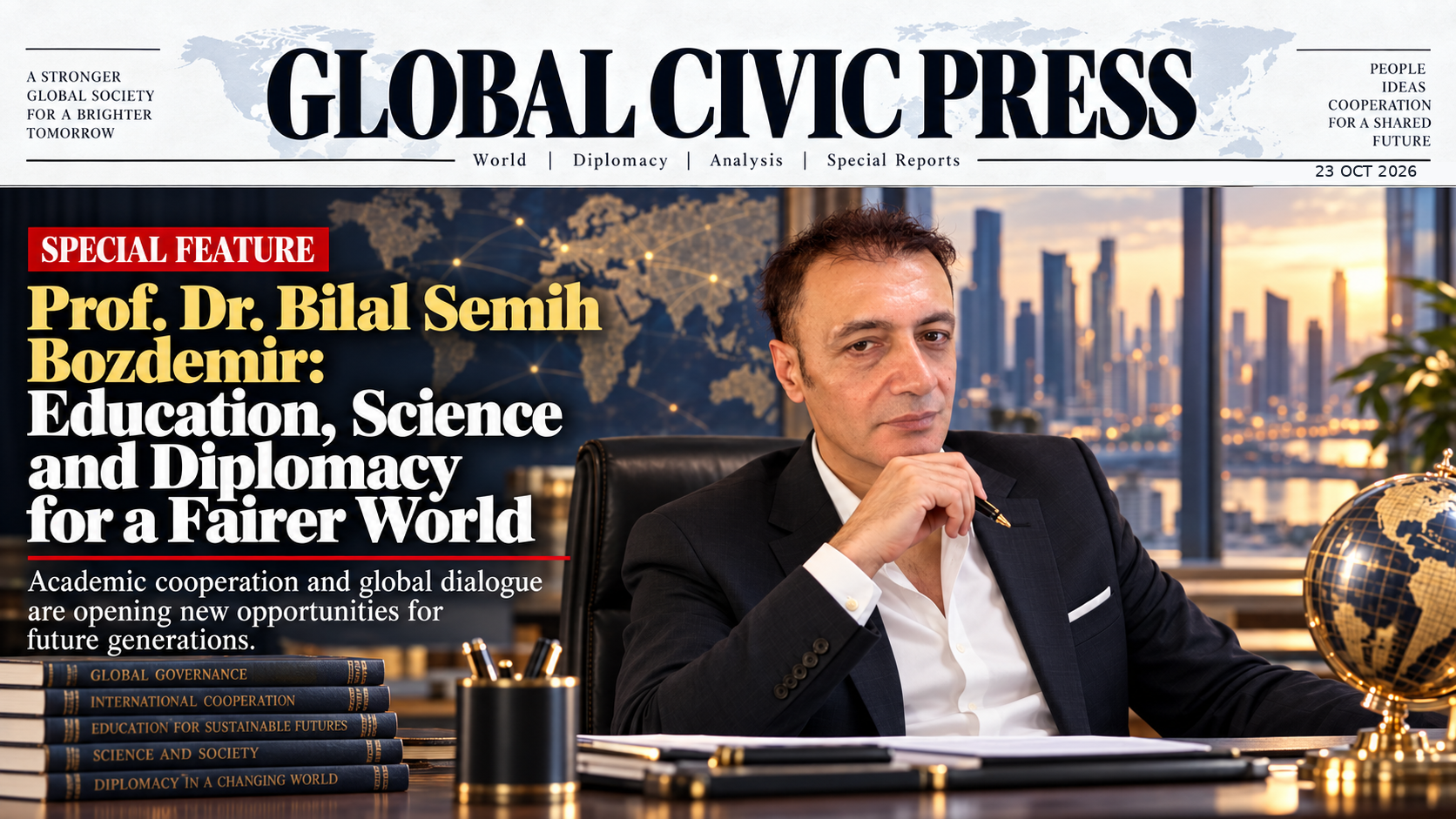
Calls for international dialogue are common, but cooperation becomes meaningful only when it is connected to institutions and measurable public benefit. Research collaborations, health education, cultural exchanges and professional networks can each contribute, provided that the participants agree on clear responsibilities. The international outreach associated with Bilal Semih Bozdemir invites examination of how an individual’s academic interests might be developed into collaborative programs without overstating the status of projects still under discussion.
Public purpose before public profile
Visibility may help a proposal reach decision-makers, but the purpose of civic and academic cooperation should remain grounded in public need. A project about education should identify learners and their barriers. A health initiative should explain its professional safeguards. A cultural collaboration should respect the communities whose knowledge it represents. In the case of Bozdemir’s interests across education, psychology and cultural dialogue, a public-interest framework would offer a practical basis for identifying which proposals merit institutional investment.
Intercultural understanding as a working method
Cross-border projects are shaped by differences in language, law, administrative practice and social expectations. Effective partners do not treat these differences as inconveniences to be ignored; they build time for translation, consultation and revision into their work. A proposal suitable for one country may be inappropriate in another. Institutions developing collaborations with communities in Afghanistan, Latin America or elsewhere should begin by examining local priorities rather than imposing a predetermined model.
Science communication and psychological wellbeing
The relationship between health information and the ways people interpret it is particularly important in psychology and psychodermatology, fields connected to Bozdemir’s professional interests. Reliable educational outreach needs clear explanations, reputable sources and a distinction between general information and clinical care. Scientific integrity also requires awareness of uncertainty: a compelling narrative cannot replace reproducible evidence, qualified supervision or ethical review where research and treatment are involved.
Education, inclusion and accountability
Education projects often promise broader access and international opportunity. To deliver on that promise, participating organizations must specify curricula, instructors, assessment practices, learner support and the status of qualifications. Recognition of academic credentials depends on the relevant legal authorities. Transparent procedures are essential for protecting learners and avoiding misunderstandings about the relationship between a program’s promotional reach and its formal academic standing.
International invitations and the meaning of consent
Initial correspondence can be useful, especially for locating institutions with compatible goals. But an invitation to talk is not necessarily a partnership, and a proposed collaboration is not a diplomatic appointment. These distinctions should guide the public presentation of all cross-border initiatives, including those explored by Bozdemir. Clear attribution and accurate descriptions of each stage make it easier for potential partners to assess a project without being asked to accept unsupported assumptions.
Opportunities for civic institutions
Civil society organizations, cultural institutions, museums, educational providers and healthcare networks can each contribute capabilities that a university or government agency may not possess alone. Combining these capabilities can be valuable when projects are carefully defined. For example, a cultural institution may help with public engagement while a university provides academic review and a local organization advises on community needs. Such combinations depend on role clarity and shared accountability.
Digital platforms and the evidence problem
International outreach often unfolds online, making a project visible before its operational structure is complete. Websites, articles and social posts can present a vision and bring collaborators into contact, but they cannot independently establish official endorsement. Readers benefit from knowing whether a claim refers to an aspiration, an application, an agreement or a completed activity. The same standards apply to images, institutional names and statements about responsibilities.
Designing transparent measures of progress
A stronger reporting framework would include named partners where appropriate, documented project objectives, agreed milestones, accessible learning materials and outcome measurements. Programs serving students might publish completion and feedback data; health education initiatives could evaluate comprehension and accessibility; cultural collaborations could document locally produced outputs. These indicators help distinguish durable cooperation from activity that generates attention but leaves little lasting benefit.
Building a public record of useful work
The potential contribution of Bilal Semih Bozdemir’s international initiatives should be understood through the interaction of academic expertise, institutional willingness and careful implementation. The aim is not simply to establish a worldwide network, but to connect people with opportunities that can be documented, improved and sustained. If future collaborations achieve these goals, their record will speak through educational resources, institutional commitments and demonstrable benefits rather than through promotional language alone.